
Innovative Tech Modernizes Nuclear EOD Training

Outcomes and Future Impact
Nuclear Qualified Units
8X Increase in training reps per year
97% reduction in set up time
83% reduction in cost
Nuclear Certified Units
~3X increase in training reps per year
98% reduction in set up time
94% reduction in cost
Additional funding
$2M from Defense Threat Reduction Agency for further enhancement
The Challenge
In its pursuit for more advanced, efficient, and effective learning technologies to train Airmen, Air Force Global Strike Command (AFGSC) sought out a new model for Explosive Ordnance Disposal (EOD) training for nuclear weapons incidents. These high-stress missions present unique risks and demand precise, practiced skills, but the training requires lengthy lead times and dedicated manpower to execute.
Existing methods teach equipment operations, procedures, and team coordination, especially in downed aircraft situations (one of the most challenging nuclear EOD scenarios), but it presented a domino effect of challenges:
Training is only available at a select location, which affects availability that trickles dow to the Airmen.
Simulating a downed aircraft in the real world is labor and time intensive, limiting the number of "reps" Airmen can get in a training session.
Limited reps impact the volume of real-world training that evaluators want EOD Airmen to have, which could impact their performance in a real-world scenario.
AFGSC needed a more modern approach that could deliver realistic, repeatable missions and provide actionable feedback. They turned to STRIKEWERX, the innovation hub of the Cyber Innovation Center (CIC).
“I was navigating uncharted territory on this project. The expertise STRIKEWERX provided greatly aided the process and delivered a viable product.”
The Solution
STRIKEWERX launched its challenge event process, a six-month market research and solution development campaign that awards federal funding for complex AFGSC needs. The process began with a problem-definition workshop that brought together subject matter experts from industry, academia, and the military.
A nationwide call for potential providers generated more than 100 innovative ideas. Twenty-five companies were selected to showcase their concepts with eight submitting proposals. A final three were ultimately selected to receive $3 million in funding to build prototype solutions across different scenarios.
Each company adapted commercial off-the-shelf technology and advanced devices for military application to accelerate innovation for the project. Throughout development, STRIKEWERX coordinated with the companies to run demonstrations, kept Air Force leadership engaged, and ensured the prototypes addressed critical training requirements. This collaborative model, supported by the STRIKEWERX innovation ecosystem, allowed AFGSC to bypass traditional acquisition delays and quickly integrate new capabilities.
The Result
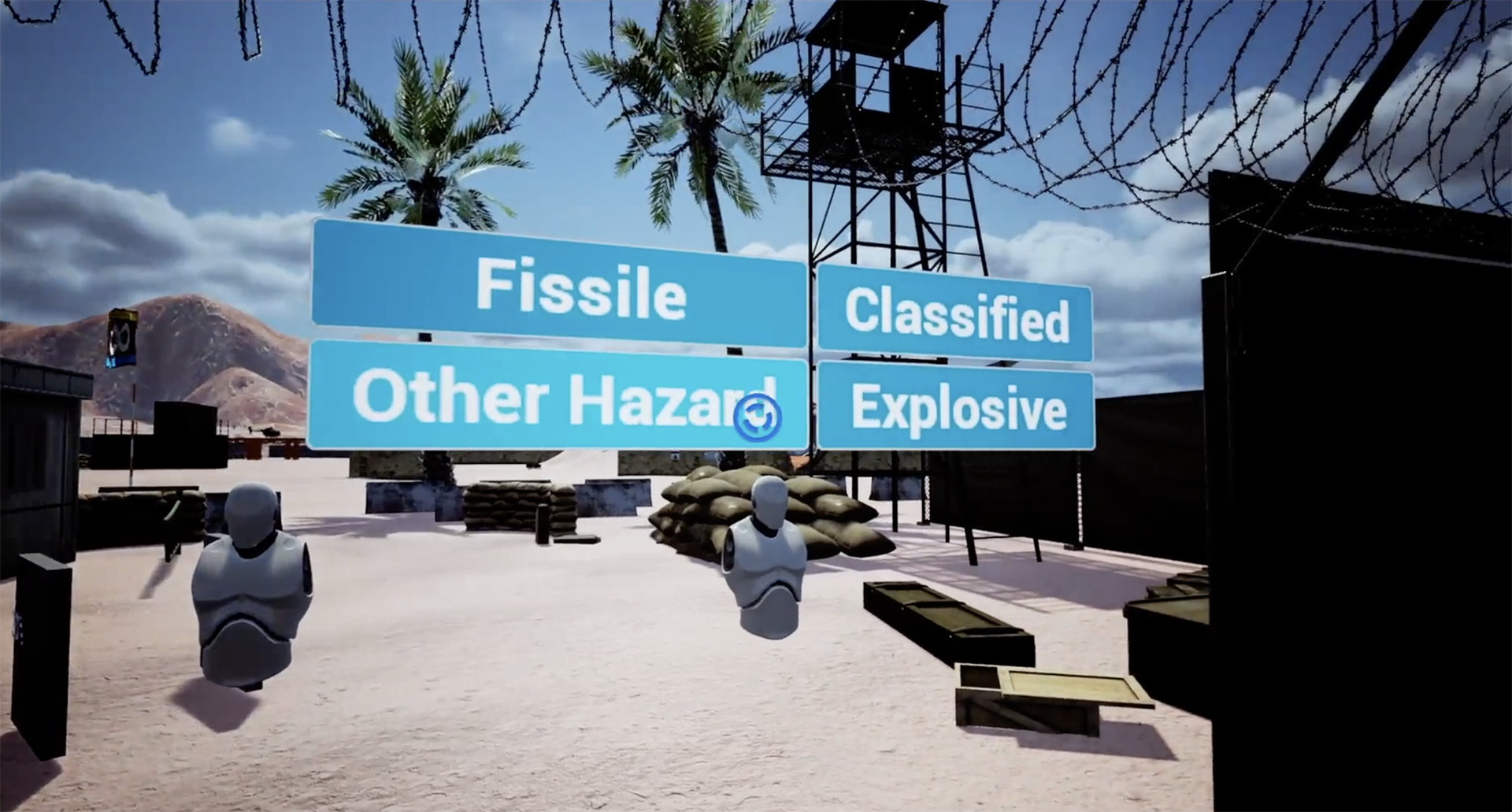
In the end, a game-based training platform from Adaptive Immersion Technologies (AIT) emerged as the most promising solution, offering virtual reality (VR) simulated missions that mirror real-world hazards, conditions, and radiation physics. The trainer places Airmen at a virtual aircraft crash site and requires them to work through scenario decision-making under varying conditions such as weather and time of day, all while it evaluates the same cognitive skills needed during real operations.
AIT collaborated with EOD operators to document training requirements, design performance metrics, build the virtual environment, and develop tools for instructors to customize scenarios. Testing confirmed improvements in reliability, usability, and training impact.
“This prototype has the potential to change how we train in EOD,” added Pulice.
Successfully replicating nuclear EOD operations, the trainer provides greater accuracy, safety, and scenario flexibility with hands-on practice time while expanding training opportunities so new EOD operators can integrate more quickly. It also increases training realism while reducing instructor setup time, enabling trainees to practice complex procedures in a controlled environment.
By providing diverse scenarios, realistic communication protocols, and authentic equipment configurations, this new system enhances mission readiness, contributes to significant man-hour savings, and maintains high-quality instruction for both annual certification and upgrade training.
More than $2 million in additional funding from the Defense Threat Reduction Agency has supported further software enhancements, and two additional systems have been installed at Kirtland AFB.
“This technology will give EOD operators an immersive, hands-on solution to practice essential skills. Our goal is to provide a system so advanced that Airmen will not want to train without it, delivering millions of dollars in training cost savings. Working with STRIKEWERX on this project has been an awe-inspiring journey focused on the most important stakeholder, the end user.”
Visit the STRIKEWERX website HERE to see how it is helping provide new training solutions for the Air Force.