
Defense innovation yields new system for countering aerial drones

Outcomes and Future Impact
Awarded $3M in federal funding for project support
6 weeks assembly time for the fully integrated system and single control architecture
The Challenge
As drones, also known as Unmanned Aerial Systems (UAS), become more common in modern warfare, they pose growing threats both overseas and at home. Small UAS (sUAS), defined by the Federal Aviation Agency as weighing less than 55 pounds, are especially difficult to detect and counter. Their size, speed, autonomy, and low visibility, combined with the latest technology advancements, have led to increased attention from Department of War (DoW) for defense innovation as it seeks to protect our nation’s Airmen and Intercontinental Ballistic Missile (ICBM) assets, especially during transport.
To do this, Air Force Global Strike Command (AFGSC) needed to create, test, and evaluate a mobile counter-sUAS (C-sUAS) prototype capable of defending transport systems against these threats, a gap that had not yet been solved within DoW.
Previously, DoW had not successfully integrated high Technology Readiness Level (TRL) counter-drone technologies with existing hardware and software to create a fully mobile, layered defense system.
AFGSC turned to STRIKEWERX, the Cyber Innovation Center (CIC)’s innovation hub, to lead a first-of-its-kind research and development (R&D) effort focused on mobile C-sUAS, and do what traditional acquisition processes had not: quickly identify, integrate, and demonstrate a deployable solution capable of protecting critical nuclear assets while on the move.
“U.S. integrated deterrence is backstopped by a safe, secure and effective nuclear component. This challenge discovered the newest developments in industry to address threats and maintain the command’s commitment to the nuclear mission.”
The Solution
STRIKEWERX launched its structured challenge event process, a six-month campaign designed to accelerate complex R&D needs within AFGSC. Unlike traditional acquisition models, this approach shortens timelines, engages nontraditional vendors, and rapidly prototypes solutions for urgent operational hurdles.
The effort began with a workshop to clearly define the problem. STRIKEWERX brought together experts from industry, academia, and the military to define mission needs and technical requirements. This collaborative approach is a core piece of the innovation process that ensures R&D efforts start with clear mission alignment and end-user input.
Through national crowdsourcing, STRIKEWERX attracted more than 60 companies to propose solutions for a mobile C-sUAS prototype. From those submissions, 22 companies were selected to present their technologies. Ultimately, Honeywell was selected and awarded $3 million in federal funding to support the project. Adapting commercial off-the-shelf technologies, Honeywell was able to create a system tailored for military use.
STRIKEWERX played a central role in coordinating system integration, facilitating collaboration among vendors, organizing demonstrations for Air Force stakeholders, and keeping leadership engaged throughout the process. This hands-on coordination accelerated development, ensured mission requirements were met, and advanced an innovative solution to counter an emerging threat to the U.S. Air Force.
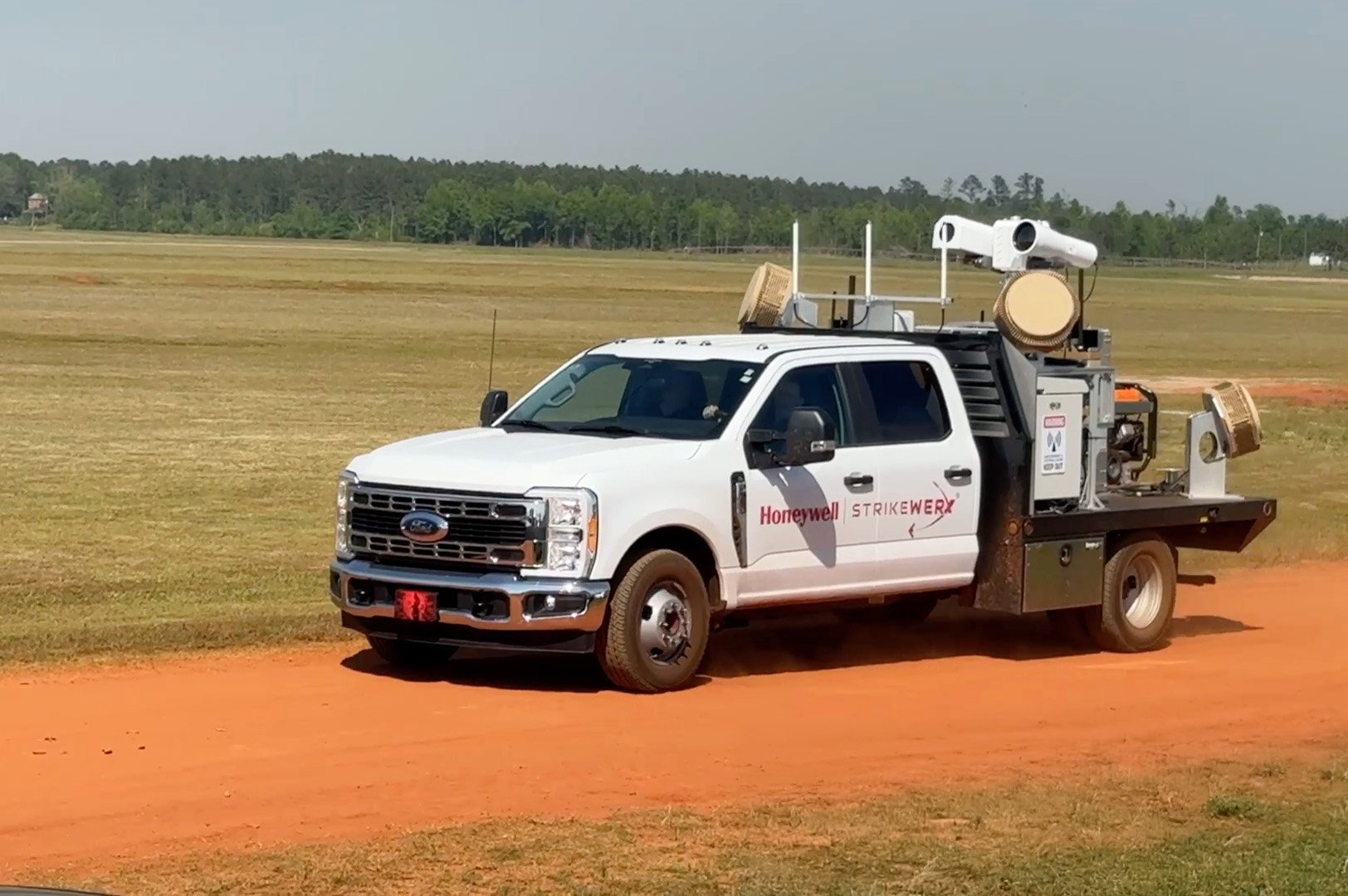
The prototype was unprecedented. It combined proven, high-TRL technologies into a single, layered system capable of detecting, identifying, and defeating small drone threats while on the move which was something that had never been done within DoW.
“This challenge has informed us on the newest, most effective techniques to counter aerial drones. The results of this project will positively impact safety, security, and effectiveness.”
The Result
STRIKEWERX conducted extensive market research to identify high-TRL components and integrate them into a single mobile prototype. The system was then tested to determine its ability to defend AFGSC convoys from swarming, autonomous sUAS.
The prototype included layered radar, Remote-ID tag capability, Electro-Optical and Infra-Red (EO/IR) sensors, electronic warfare jamming, and a kinetic kill option of drone-on-drone defense that launches on the move to disable enemy UAS with a net. All components were provided on bailment at no cost to the command.
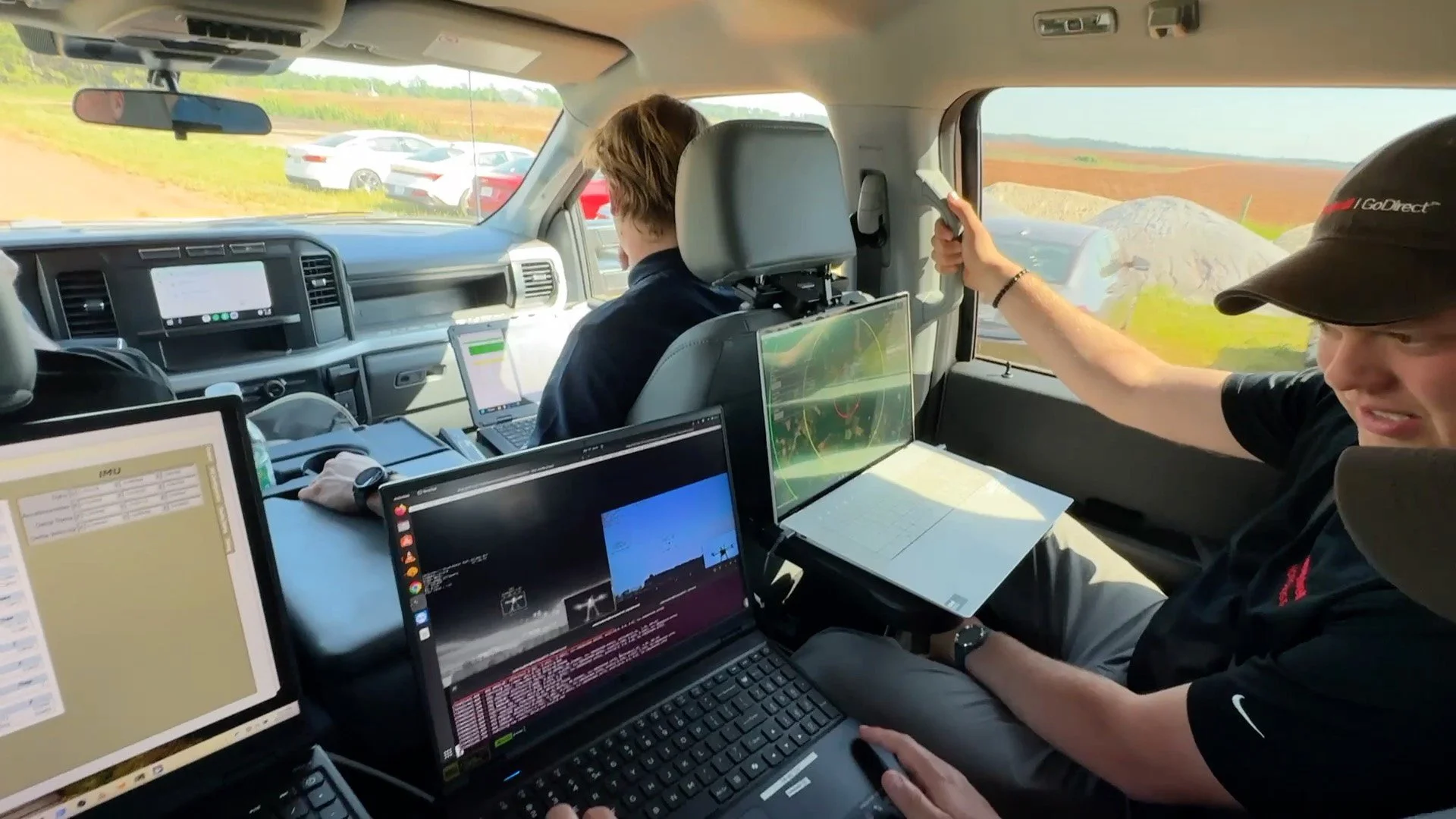
The entire system operated through a single command and control system with independent power, position navigation, and timing servers mounted in the back of a Ford F-350, allowing operators to control it from inside the vehicle. The prototype underwent internal compatibility and functionality testing near Honeywell’s facility in Georgia. A three-day government-sponsored test event, coordinated and planned by the 416 Flight Test Squadron at Edwards Air Force Base, California, validated the system’s detection, identification, and defeat capabilities.
This project demonstrated that CIC’s innovation model and STRIKEWERX’s nontraditional contracting pathways can accelerate national defense capabilities. For the first time, a mobile, layered sUAS defense system built from independently developed technologies came together as a single prototype in a matter of weeks and proved that tracking, classifying, and countering airborne threats while in motion is possible. Historically, these technologies operated separately, in fixed locations, or through long development programs. This fast paced, ecosystem driven effort showed how complex national security challenges can be tackled when organizations work together and use flexible, innovative contracting to accelerate progress. The resulting market research provides valuable insight to AFGSC in a technology area that continues to grow in importance and operational urgency.
“This project was essential in moving research and development forward for all DoW. The prototype devised by STRIKEWERX and Honeywell had never been done before in such a quick, low-cost manner. It was crucial to informing a potential way ahead for on-the-move UAS defense when it comes to protecting our people and assets inside the United States.”
Visit the STRIKEWERX website HERE to see how it is pushing research and development, creating defense innovation for the Air Force.