
Inaugural EARL Cup showcases next generation defense technology for training aircrews
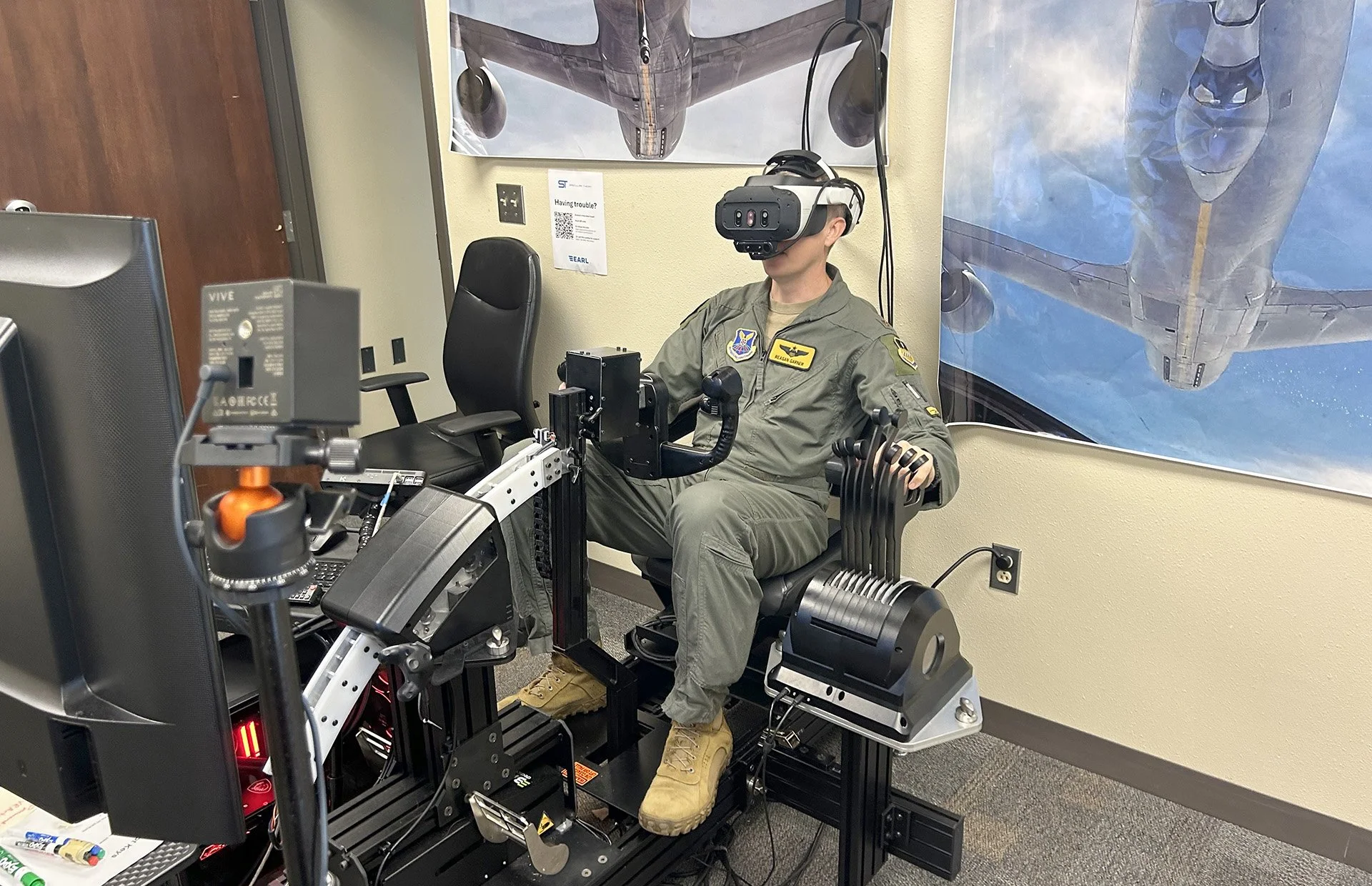
B-52 Stratofortress pilots at Barksdale Air Force Base, La., participated in the EARL Cup on June 22-26, a first of its kind aerial refueling competition that demonstrated how objective performance scoring, live analytics, and virtual training technologies are shaping the future of objective aircrew training and readiness. The EARL (Experiential Air Refueling Lightweight) simulator, was developed through a partnership between Air Force Global Strike Command, STRIKEWERX, and Specular Theory to help better and more efficiently train pilots on air refueling tasks. (U.S. Air Force Photo courtesy of STRIKEWERX)
By Sean Green | CIC Facilitation and Outreach Manager
BOSSIER CITY, La. — B-52 Stratofortress aircrew members and instructors advanced pilot training analysis for the U.S. Air Force by competing in the inaugural EARL Cup, a groundbreaking defense technology competition across multiple aircraft platforms.
Held June 22-26, 2026, the first of its kind competition featured two 2-person instructor pilot teams from formal training units representing the B-52 at Barksdale Air Force Base, Louisiana; KC-46 Pegasus, from Altus Air Force Base, Oklahoma; plus C-17 Globemaster III and C-5 Galaxy communities at Joint Base San Antonio-Lackland, Texas.
Pilots competed using Specular Theory’s EARL (Experiential Air Refueling Lightweight) simulator, a cutting-edge defense technology training platform designed to evaluate and sharpen the precision skills required during aerial refueling operations.
The live scoring, performance analytics, and objective evaluation generated by the virtual instructor represent a significant advancement in how pilot proficiency can be measured.
“Competition has always driven excellence, and training should be no different. When students receive measurable feedback and can see their performance improve in real time, learning accelerates. Competition gives them something tangible to strive for while building confidence, community, and ultimately better aircrew," said Morris May, founder and CEO of Specular Theory. “Training should be fun and when competition is built into the experience, it can create a stronger culture, build community, and drive better outcomes across Air Force formal training units.”
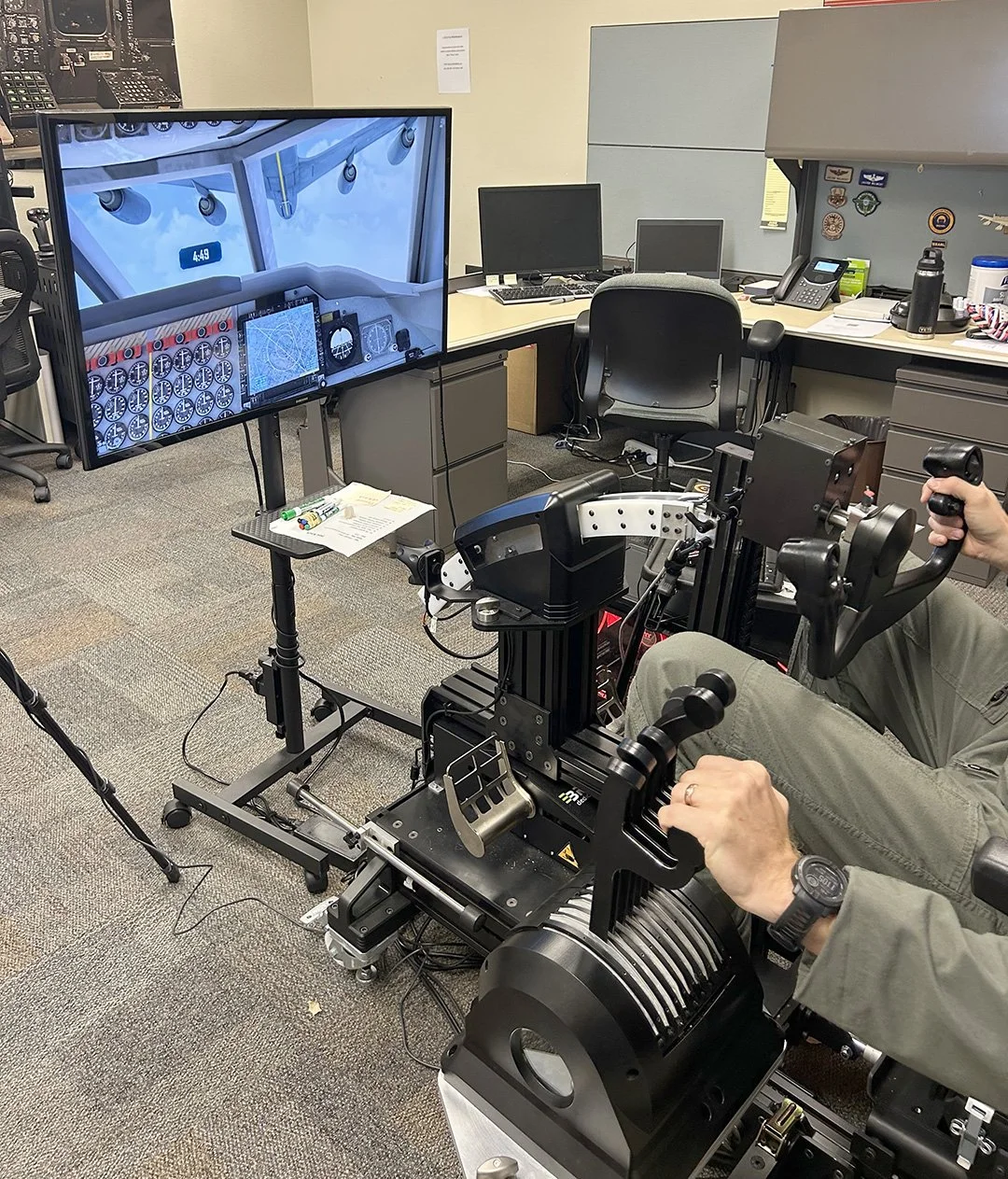
The EARL Cup on June 22-26, a first of its kind aerial refueling competition, demonstrated how objective performance scoring, live analytics, and virtual training technologies are shaping the future of objective aircrew training and readiness. The EARL (Experiential Air Refueling Lightweight) simulator, was developed through a partnership between Air Force Global Strike Command, STRIKEWERX, and Specular Theory to help better and more efficiently train pilots on air refueling tasks. (U.S. Air Force Photo courtesy of STRIKEWERX)
Each participant completed three scored attempts measured against critical performance criteria including closure rate, contact position, and sustained contact time, with live leaderboard updates providing real-time competition standings. The C-5 team from Joint Base San Antonio-Lackland was named competition winner and was awarded the EARL Cup Trophy. This traveling squadron trophy will remain with the top-performing aircraft community for one year, with annual engravings recognizing each year’s winning teams.
“Global Strike Command has been at the forefront of the effort to standardize evaluation, measure performance, and give credibility to virtual training from the beginning,” said U.S. Air Force Lt. Col. Brandon Wolf, project champion for the EARL at Barksdale AFB. “The B-52 community helped pioneer these capabilities with its support of the EARL platform and its participation in the EARL Cup is helping shape the future of aircrew training across the Air Force.”
The EARL simulator itself represents a significant advancement in Air Force training innovation. Developed by Specular Theory with support from STRIKEWERX, this virtual part-task trainer enables high-fidelity, multi-crew aerial refueling training across multiple aircraft and crew positions. The platform supports AI-enabled instruction, objective performance evaluation, analytics, and distributed training, enabling aircrew members to build proficiency while reducing reliance on aircraft flight hours and operational fuel.
The B-52 community played a key role in the platform's development and fielding by helping to demonstrate how portable virtual training can complement traditional simulator and live-flight instruction while increasing repetition opportunities for student pilots.
As the only currently available ground-based aerial refueling training capability supporting the B-52 community, EARL is expected to generate substantial operational savings while improving readiness. Current projections estimate the simulator could save approximately $10 million in flying-hour costs per training class, with the Air Force conducting two to three B-52 training classes annually.
“Beyond the projected cost savings, EARL demonstrates how partnerships between the Department of the Air Force, industry, and organizations like STRIKEWERX can rapidly transition innovative technologies into operational training, improving both readiness and training capacity,” said Russ Mathers, director of STRIKEWERX.