
Transforming B-52 Air Refueling Training through Innovation
Outcomes and Future Impact
Flying Hour Cost Savings
$10M per training class
Flight Hours Saved Annually
200+ HRS relieving operational squadrons to focus on higher-priority missions, more advanced in-air tactics and weapons instruction
The Challenge
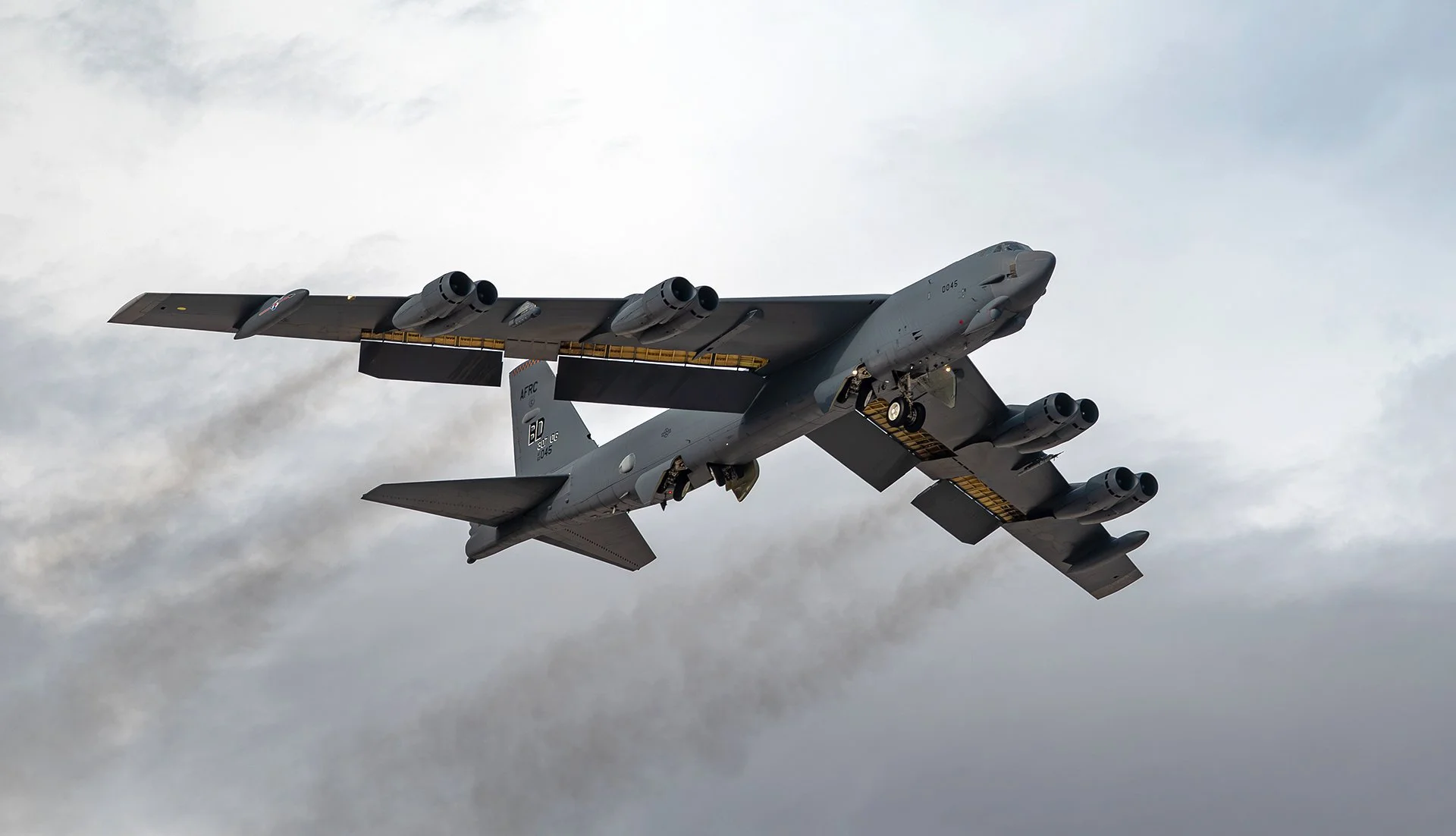
Air Force Global Strike Command (AFGSC) faced a pivotal challenge: how to modernize and sustain effective air-to-air refueling (AAR) training for pilots of the B-52 Stratofortress amid mounting operational costs and the limitations of an aging fleet. Traditional live-fly training missions, especially for complex tasks like AAR are increasingly unsustainable. The high costs, lack of aircraft availability during maintenance, and insufficient capabilities in existing simulators all contributed to a system that struggled to meet current demands, let alone future needs.
Several key issues put into perspective the scope and urgency of the problem:
High hourly operating costs of over $34,000 to fly the B-52 and nearly $14,000 for the KC-135 tanker
Aging aircraft fleets are difficult to maintain, impacting training opportunities for bomber and tanker aircrews, reducing air refueling proficiency for pilots and boom operators, and negatively impacting mission readiness
Simulator limitations, particularly the inability of the current B-52 simulator to accurately replicate the aerodynamics of air refueling between bomber and tanker
Without targeted modernization of its training infrastructure, AFGSC risked continued inefficiency, growing resource strain, and underprepared pilots entering critical missions.
AFGSC enlisted the help of STRIKEWERX, its official innovation hub partner operated by theCyber Innovation Center (CIC).
“Limited flight time for new pilots means limited proficiency in AAR, which has an impact on overall readiness and national security. We needed STRIKEWERX to help solve this problem because they have flexibility, manpower, and connections to
find the best and brightest the industry has to offer.”
The Solution
Through its challenge event process, the CIC’s STRIKEWERX team conducted extensive market research to source a reliable provider to help AFGSC reimagine how bomber crews are trained, address gaps, reduce costs, and ultimately enhance pilot readiness.
A challenge event is a six-month process designed to tackle complex problems that lack a clear solution path. It widely advertises the problem to a broad network of innovators, encourages public solution submissions, and fosters collaboration through open dialogue with subject matter experts who evaluate proposals for prototype development.
STRIKEWERX first hosted a workshop to collaboratively define both the software and hardware needs, paving the way for a national campaign that sourced more than 100 solution providers. The focus was on identifying a simulator that could realistically support pilots in mastering the precise skills and visual coordination essential for AAR. From the initial group of 100, 25 companies were selected to showcase their ideas but two came out on top and were selected to develop hardware prototypes. The market research from the challenge event also uncovered a possible software solution that was already in development - Specular Theory’s Enhanced Air Refueling Lightweight (EARL).

Through prototype testing and user feedback, it was determined that the way ahead for the Air Force was to utilize EARL as a single solution, so STRIKEWERX and its partners focused on maturing it to incorporate the desired hardware and software identified through the challenge event.
Designed to run on commercial off-the-shelf hardware, EARL is a portable extended reality (XR) trainer that models the complex refueling interaction between a B-52 and its tanker. It provides an immersive, modular, and scalable training platform that supports multiple airframes and can even be deployed to forward operating locations. To further refine EARL, the STRIKEWERX team collaborated with AFGSC Airmen and Specular Theory to model the interaction between bomber and tanker, including the forces required to move the yoke and throttle, as well as aircraft reactions to create a realistic trainer experience.
“We were able to be involved in this process to help shape a product that will better train pilots more quickly and efficiently. This will give us the new ability to take someone who has never flown before and accomplish air-to-air refueling in their first time flying” said Lt. Col. Wolf.
The Result
STRIKEWERX managed and coordinated a multi-phase, multi-business project that resulted in securing trainers for multiple AFGSC, Air Education and Training Command, and Air Mobility Command squadrons, directly contributing to pilot proficiency in one of the most complex tasks performed by B-52 pilots. The result was a compact, readily deployable trainer that has significantly reduced the need for live-flight training.
Key Features:
Mobile, compact, and scalable
Multiplayer for faster pilot proficiency
Modernized, realistic training environments that enhance pilot precision and skill
Lt. Col. Wolf added, “its been rewarding to see this project gain momentum because the students benefit from this. The new trainer will alleviate long delays between flights due to weather, scheduling, or maintenance issues. EARL isn’t a one-off, it’s the future of meaningful flight training for the Air Force.” Future iterations may allow B-52 pilots to log official refueling training hours within the simulator, reserving live-flight assets for more mission-critical tasks.
“STRIKEWERX was crucial in using their proven market research and project management skills to achieve an end result that delivered on pushing training for the command forward.”
With measurable cost savings, accelerated pilot readiness, and a scalable, modern solution, CIC proves how collaboration can overcome even the most entrenched challenges.
Visit the STRIKEWERX website HERE to see how it is helping sustain and modernize the B-52.