
Defense tech offers a simple fix with lasting impact
Outcomes and Future Impact
Solved a 6-decades old challenge in 1 year
Reduced maintenance time by 85 min. per site
Scaled to all 450 AFGSC missile launch facilities
The Challenge
As part of the mission of Air Force Global Strike Command (AFGSC) to ensure deterrence, missile maintainers are responsible for the upkeep and readiness of the nation’s Intercontinental Ballistic Missiles (ICBMs). This work is unrelenting and occurs in all seasons and all weather.
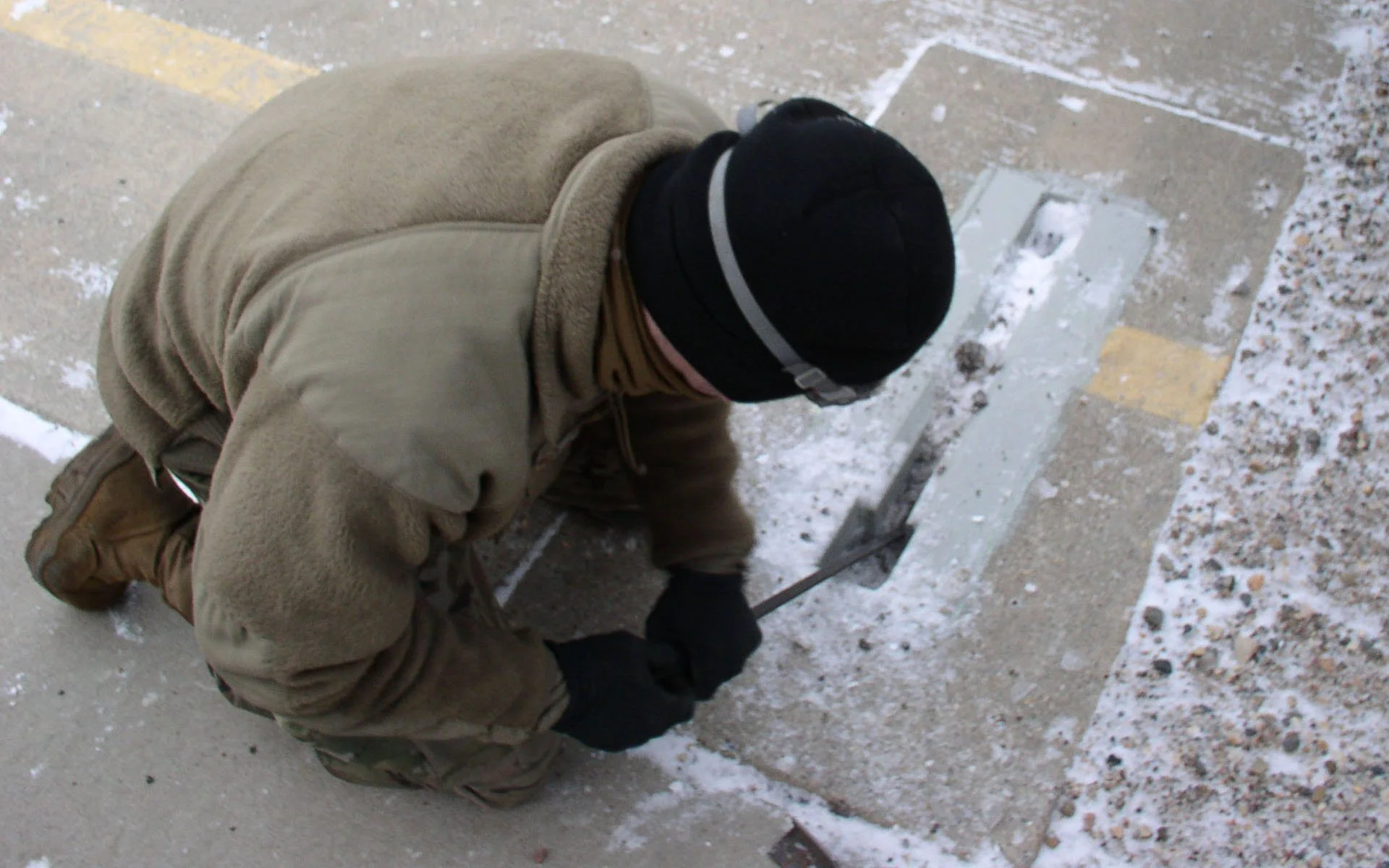
To do this, the ICBM must be raised and lowered from its silo. The Transport Erector (TE) that performs this task has dedicated, in-ground tie-downs at each ICBM location, which act as anchor points for raising and lowering. With maintenance done year-round at locations that experience extreme weather, the tie-downs become a haven for layers of ice, snow, rocks, and even animals like snakes, rats, and bugs.
Keeping the tie-downs clear of debris was a tedious and morale-draining task that also led to lost time.
This issue had existed for nearly 60 years since Malmstrom Air Force Base, Montana, became operational in October 1962.
Maintainers spent 3.5-5 hours per site to clean these by hand.
AFGSC sought out a new solution that would fully seal the tie-downs when not in use to not only speed up the time spent by missile maintainers at each site, but to increase their overall quality of life at work.
To solve this long-existing challenge, AFGSC tapped into STRIKEWERX, innovation hub of the Cyber Innovation Center (CIC), to use its design sprint method.
“While the TE jack stand slot’s design flaw caused a minor loss of manhours for the command, it was a major morale issue. Maintainers spent hours on their hands and knees digging up rocks and debris in extreme heat, or snow and ice in extreme cold, just to perform routine maintenance.”
The Solution
The STRIKEWERX design sprint is a five-day effort that brings together a team of business, academia, and government to define the challenge, understand its needs, and then design and test a prototype.
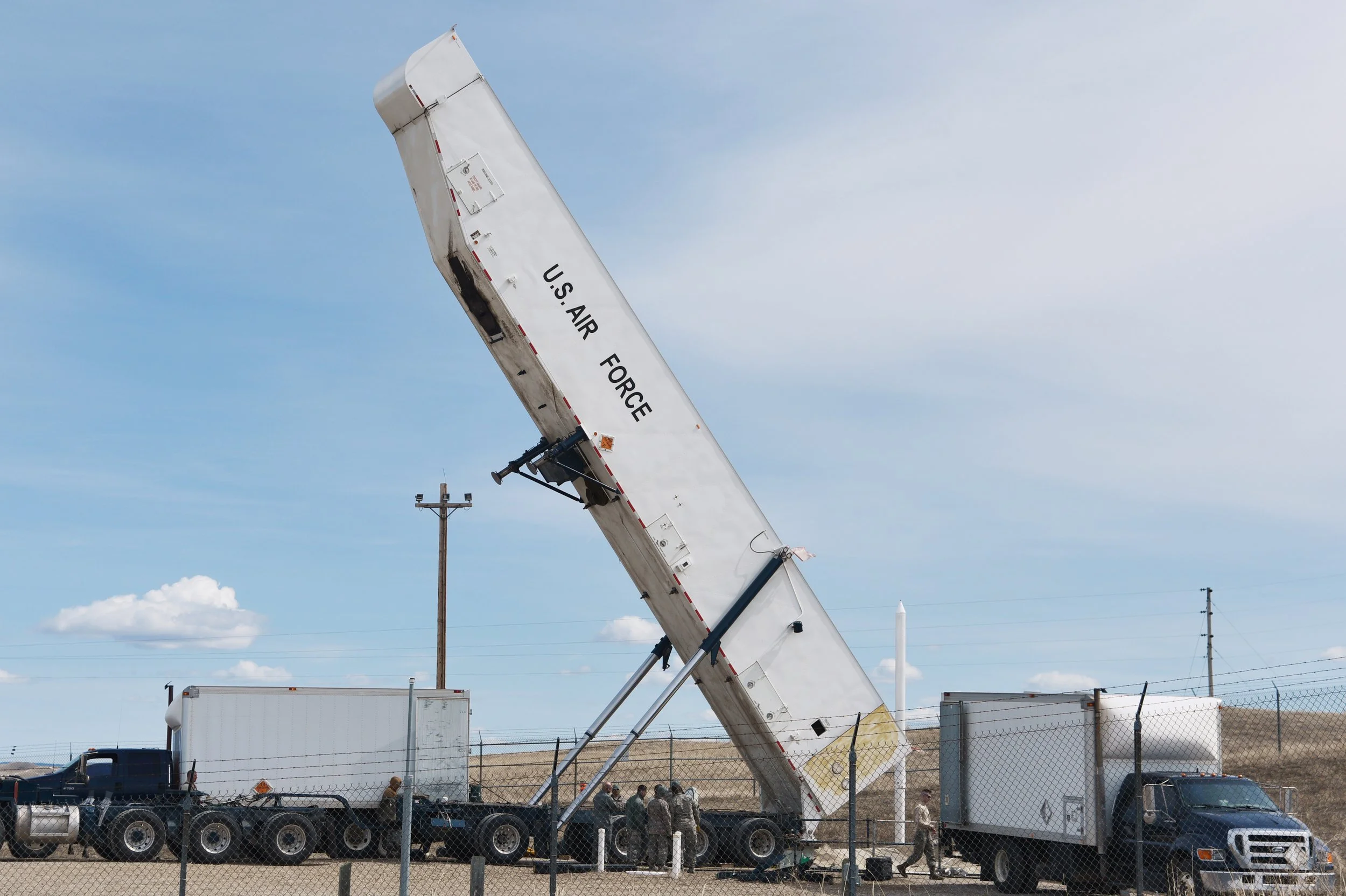
A transporter erector attached to a payload transporter is raised April 3, 2019, at a launch facility near Malmstrom Air Force Base, Mont. (U.S. Air Force photo by Senior Airman Chiyanna White)
Louisiana State University of Shreveport (LSUS) was recruited to participate in the sprint due to their robust 3D printing capabilities. LSUS produced a one-to-one scale 3D printed replica of the existing tie-down. This would serve as the base for finding and testing a scalable solution focused on size, production, durability, and ease of use needs.
U.S. Air Force Tech Sgt. Joshua Bolton, maintainer of the 90th Missile Wing at the time of the project, demonstrated a homemade solution as a reference for participants. His idea included a removable cover which was then adapted into two prototype options.
Industry partner Kennon Products drew on their experience in coverings for military aircraft to devise a prototype that used a rugged, durable material with magnets to secure the cover.
The Louisiana Tech engineering department was recruited to participate in the sprint due to previous project performance in other STRIKEWERX projects. They used their student and instructor knowledge to create a second option; a low-profile steel plate with a gasket seal to keep out moisture and debris.
Testing of the two prototypes by Airmen at AFGSC bases favored the design by Louisiana Tech due to its simplicity, durability, and low cost. This design was later modified for better gasket adhesion and to secure it in place.
All told, the cost of the design and production of prototypes for testing was approximately $20,000.
“The STRIKEWERX design sprint process is crucial in quickly and cost effectively solving issues that range from significant lost dollars and manhours to long-standing problems that affect the quality of life for Airmen.”
The Result
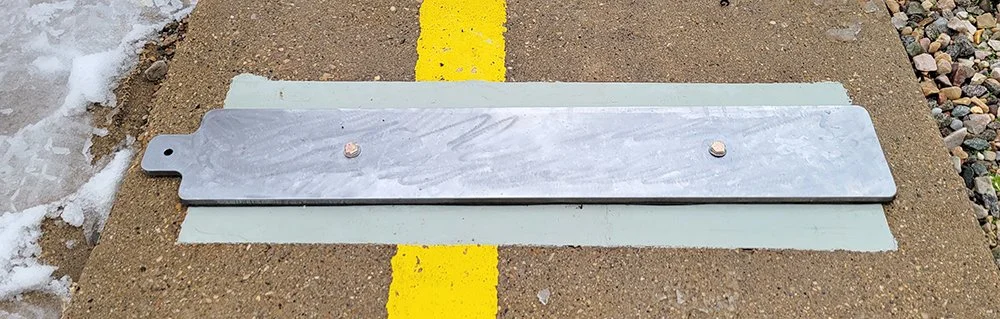
While the solution saves only thousands of dollars each year, its primary importance is saving maintenance time of the tie-downs by 85 minutes per site. This time savings is magnified by the quality-of-life improvement for Airmen who see reduced time spent in difficult conditions.
The final version was produced by Northrup Grumman and scaled to all 450 missile launch facilities throughout AFGSC. A pain point for missile maintainers for the better part of six decades was remedied in one year.
“Many young Airmen desire to make a difference. Having this innovation completed gives all Airmen the knowledge that they can voice their opinions and ideas. It shows their ideas are valued and can be brought to service within their careers.”
Visit the STRIKEWERX website HERE to see how their design sprints are providing new solutions for the Air Force.